Resilient Public-Private Partnerships: a regional and multi-sectoral toolkit from preparation to sustainable project financing
 Peer Reviewed
Date issued
April 2024

Subject
Public Private Partnership;
Natural Disaster;
Climate Risk;
Disaster Risk Management;
Climate Resilience;
Sustainability;
Resilience;
Risk Management;
Climate Change;
Infrastructure Development;
Disaster;
Fiscal Policy
JEL code
H54 - Infrastructures • Other Public Investment and Capital Stock;
Q56 - Environment and Development • Environment and Trade • Sustainability • Environmental Accounts and Accounting • Environmental Equity • Population Growth
Category
Monographs
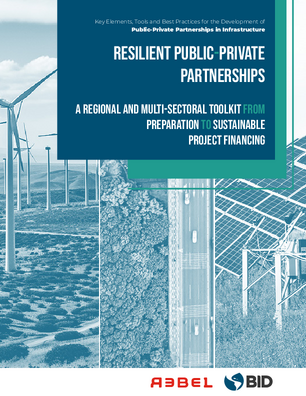
The Toolkit presented here aims to provide a comprehensive approach to environmental sustainability and climate resilience in infrastructure development under Public-Private Partnerships (PPPs). It adopts a multi-sectoral perspective and emphasizes a fiscal commitment that spans the entire project life cycle. This Toolkit builds on previous applications by covering all stages, from initial preparation to project financing, while highlighting the importance of maintaining sound public finances.
The Toolkit is organized into four sections, each corresponding to a key stage in the PPP project life cycle:
1. Initial PPP Project Appraisal Phase: This section guides project stakeholders in assessing how climate and natural disaster risks may impact the project at an initial level.
2. PPP Structuring Phase: This part assists stakeholders in incorporating climate resilience considerations into various analyses, including technical, financial, economic, fiscal, social, and environmental aspects.
3. PPP Transaction Phase: Here, the Toolkit demonstrates how to integrate climate resilience into contract design, bidder qualifications, project bidding, and the evaluation of submitted offers.
4. PPP Contract Management Phase: This section supports governments and project planners in tracking commitments related to climate and natural disaster risks made during the Transaction Phase and in managing any unforeseen risks.
Overall, the Toolkit serves as a valuable resource for integrating climate resilience into infrastructure development projects, ensuring both sustainability and effective risk management.
The Toolkit is organized into four sections, each corresponding to a key stage in the PPP project life cycle:
1. Initial PPP Project Appraisal Phase: This section guides project stakeholders in assessing how climate and natural disaster risks may impact the project at an initial level.
2. PPP Structuring Phase: This part assists stakeholders in incorporating climate resilience considerations into various analyses, including technical, financial, economic, fiscal, social, and environmental aspects.
3. PPP Transaction Phase: Here, the Toolkit demonstrates how to integrate climate resilience into contract design, bidder qualifications, project bidding, and the evaluation of submitted offers.
4. PPP Contract Management Phase: This section supports governments and project planners in tracking commitments related to climate and natural disaster risks made during the Transaction Phase and in managing any unforeseen risks.
Overall, the Toolkit serves as a valuable resource for integrating climate resilience into infrastructure development projects, ensuring both sustainability and effective risk management.


Generative AI enabled