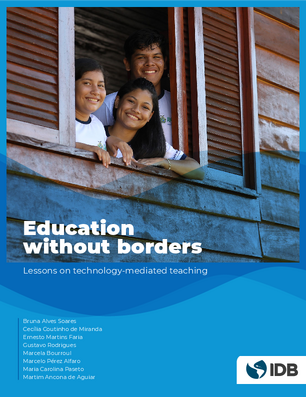
Education without Borders: Lessons on Technology-Mediated Teaching
Date issued
August 2026
Subject
Education;
Educational Institution;
Science and Technology;
Infrastructure Development;
High School;
Primary Education;
Digital Technology;
Best Practices;
Access to Education;
Outcome-Based Education;
Pandemics
JEL code
I21 - Analysis of Education;
I28 - Government Policy;
O33 - Technological Change: Choices and Consequences • Diffusion Processes
Category
Catalogs and Brochures
Technology-mediated face-to-face teaching has become an essential strategy for expanding access to quality education in remote regions such as the Legal Amazon, where geographic challenges, teacher shortages, and infrastructure limitations persist. This Technical Note analyzes practical experiences in implementing this model, focusing on two Brazilian cases (Amazonas and Manaus) and three prominent international and national references (Ceibal in Uruguay, CARNET in Croatia, and the Hybrid Education Innovation Network RIEH in Brazil).
The analysis is structured around three critical dimensions for the success of these initiatives: (i) connectivity and technological infrastructure; (ii) monitoring of learning outcomes and student progression; and (iii) coordination between in-person teachers and instructional teachers. Based on the evidence gathered, the Note presents practical recommendations for public managers and policymakers, highlighting the importance of integrated models that combine technology, pedagogical management, and institutional strengthening to ensure equity and educational quality in challenging contexts.
The analysis is structured around three critical dimensions for the success of these initiatives: (i) connectivity and technological infrastructure; (ii) monitoring of learning outcomes and student progression; and (iii) coordination between in-person teachers and instructional teachers. Based on the evidence gathered, the Note presents practical recommendations for public managers and policymakers, highlighting the importance of integrated models that combine technology, pedagogical management, and institutional strengthening to ensure equity and educational quality in challenging contexts.


NO